The platform
One compact unit at the panel, one dashboard for the fleet, and an alerting engine you can read like a table — because "we thought it would have texted us" is not an acceptable failure mode.
Every station reports over cellular every 10–15 minutes — and immediately when something happens. The overview shows signal, power, battery, pump state, last runs, and a live event feed; a watchdog flags any station that goes quiet within 15 minutes.
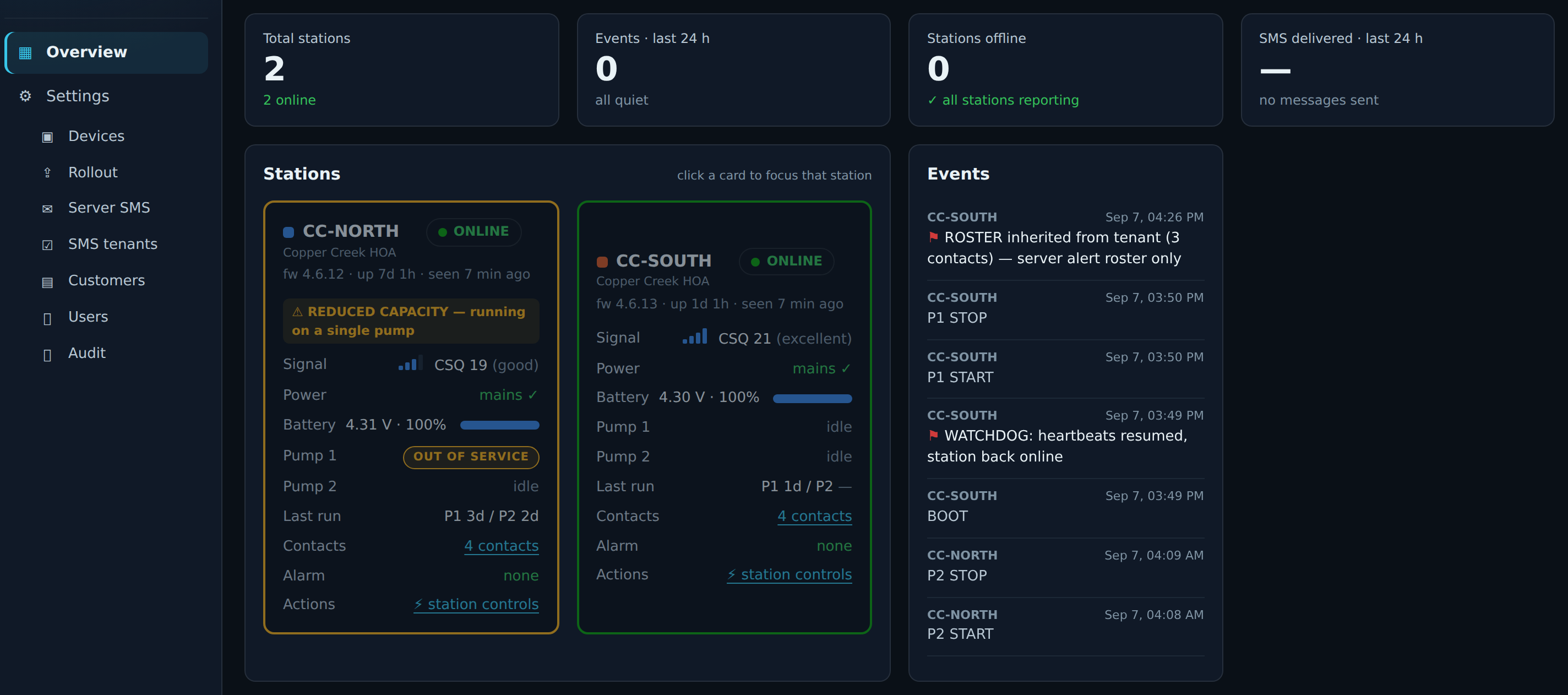
Signal quality, mains and battery, each pump's state — including "out of service" and reduced-capacity flags — and how long since each pump last ran. Absent data shows as absent, never guessed.
Battery voltage, cellular signal, and pump load per station, from an hour back to a week — the pattern that predicts a failure is usually visible before the failure.
Alarms, pump cycles, boots, power events, roster changes, and watchdog transitions, timestamped and per-station. Focus one station with a click, or watch the whole fleet.
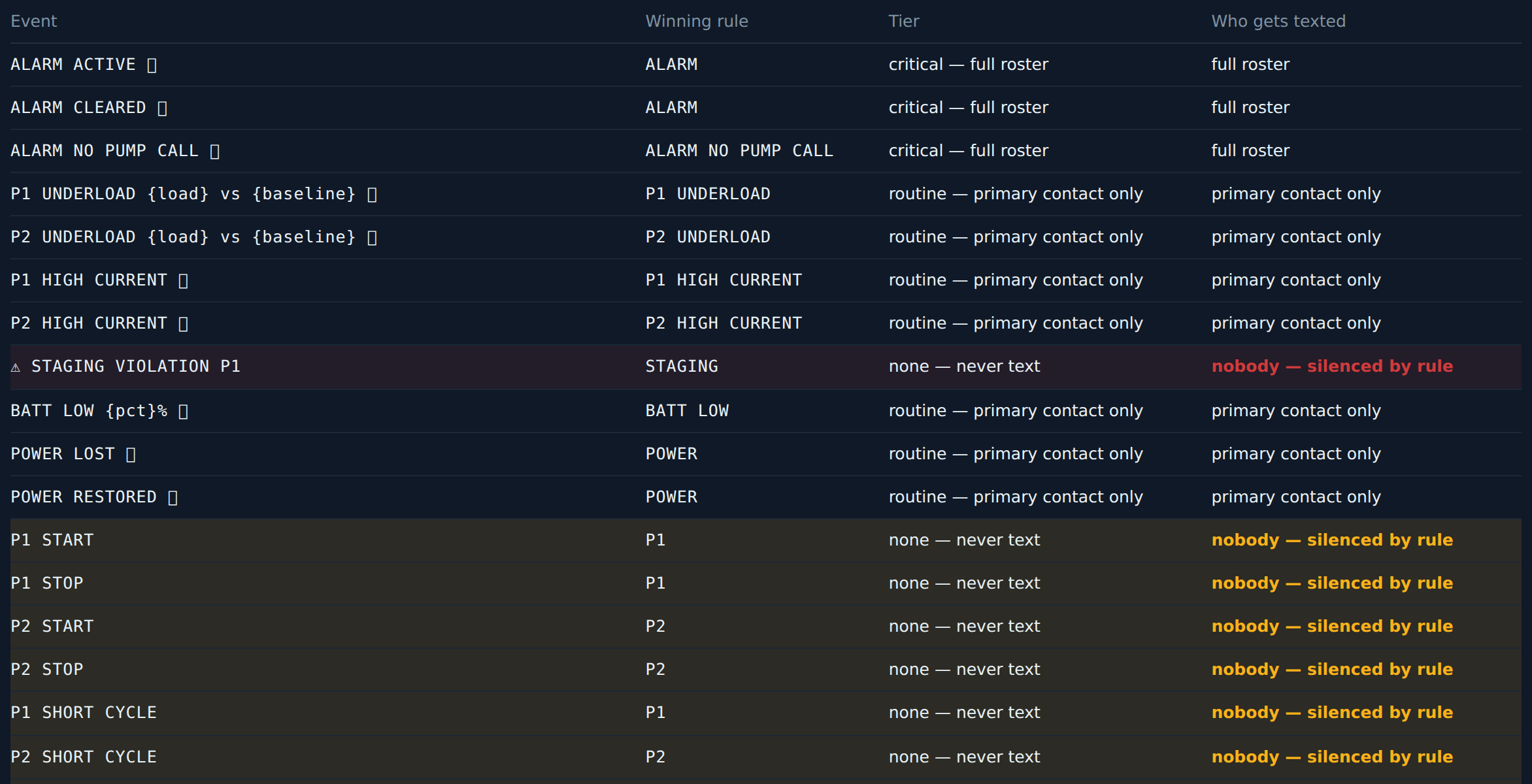
Most monitoring fails silently: an event nobody wrote a rule for simply never texts. StationSentry renders the entire event vocabulary against your rules — what fires, at what tier, to whom.
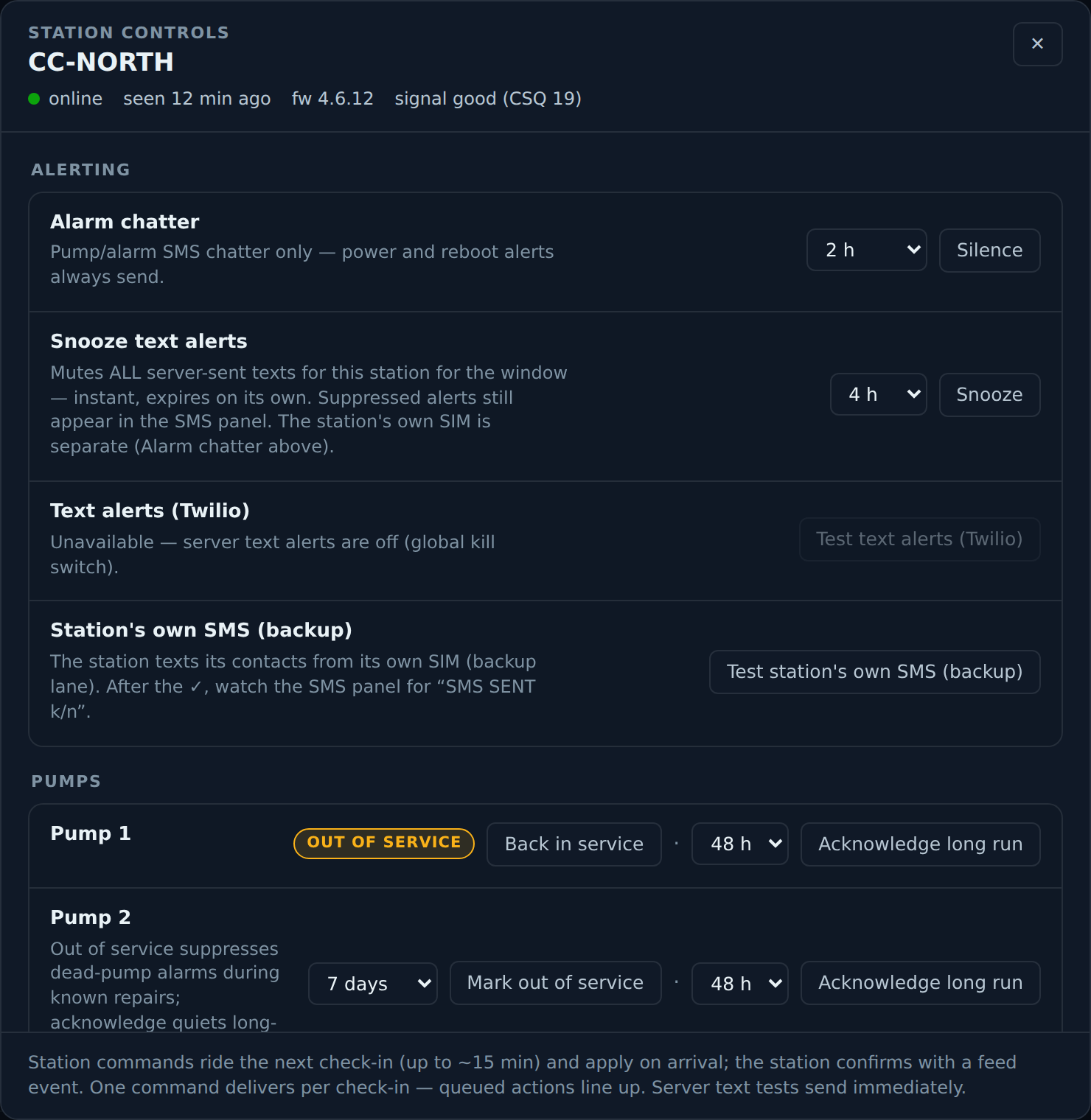
Maintenance shouldn't text the whole roster. Station controls give the people doing the work honest, audited switches:
Unlimited sign-ins per organization, each scoped to that organization's stations. Turnover is an email, not a migration.
A pump-service vendor can manage many customer organizations from one dashboard — each customer still sees only their own stations.
Alert contacts join by replying YES to a carrier-verified enrollment text, one confirmation per organization. STOP always works, instantly, and shows up on the roster.
A compact, battery-backed monitor that wires into the station panel you already have — no internet service, no new conduit, no PLC programming.
One unit, one monthly service, everything above included.
Pricing & ordering → StationSentry